
 Skip to content
Florida Dangerous Instrumentality Doctrine Explained
We Don’t Take “Low” for an Answer!

- Quick Answer
- What is the Dangerous Instrumentality Doctrine?
- Origin: Anderson v. Southern Cotton Oil (1920)
- The Three Elements
- Who Can Be Held Liable
- Exceptions: Theft, Conversion, Service Stations
- Statutory Cap: Fla. Stat. § 324.021
- Modern Applications (Amazon, Uber, Rental Cars)
- How Florida Compares to Other States
- Why This Doctrine Matters for Victim Recovery
- What to Do If You Were Hit by a Commercial Vehicle
- Frequently Asked Questions
By Lorne Kaiser & Steven Romanello, Kaiser Romanello, P.A. | Florida personal injury attorneys since 2002 | Last reviewed: June 2026
What is the Dangerous Instrumentality Doctrine?
The dangerous instrumentality doctrine is a Florida common-law rule (judge-made law, not a statute) that classifies motor vehicles as "dangerous instrumentalities" — objects so inherently dangerous that their owners must answer for the harm they cause regardless of who is driving them.
Under the doctrine, the owner of a motor vehicle is vicariously liable for damages caused by anyone operating the vehicle with the owner's express or implied permission. The owner does not have to be negligent. The owner does not have to be present. The owner simply has to own the vehicle and have allowed the driver to use it.
This is dramatically broader than most other states, which typically require the plaintiff to prove the owner was negligent (e.g., entrusting the vehicle to an incompetent driver, or some employment relationship).
Origin: Anderson v. Southern Cotton Oil (1920)
The doctrine traces to the Florida Supreme Court's 1920 decision in Anderson v. Southern Cotton Oil Co., 73 Fla. 432, 74 So. 975. The case involved a truck owned by Southern Cotton Oil being driven by an employee who struck a pedestrian. The Florida Supreme Court held that the owner of the truck was liable for the injuries — not because the company was negligent in hiring the driver, but because operating a motor vehicle on public roads created such a high risk of harm that the owner should bear vicarious responsibility.
The Court reasoned that motor vehicles share characteristics with "dangerous instrumentalities" — like live wires, vicious animals, explosives — for which common law has long imposed strict accountability on owners.
Anderson has been cited in thousands of subsequent Florida cases. It has been refined, narrowed in specific contexts, and confirmed by every major Florida appellate court. In 1995, the Florida Supreme Court in Aurbach v. Gallina, 753 So. 2d 60 (Fla. 1995), reaffirmed and extended the doctrine to apply across virtually all vehicle ownership scenarios.
The Three Elements of a Dangerous Instrumentality Claim
To establish vicarious liability under the doctrine, the plaintiff must prove:
1. The defendant owned the vehicle
Ownership is determined by title or beneficial ownership, not necessarily who is on the registration. Lease companies, finance companies, and rental car companies have been treated as owners in various contexts. Employer ownership of fleet vehicles obviously qualifies.
2. The driver had the owner's permission
Permission can be express (the owner specifically said "you can drive my car") or implied (the owner left the keys in an accessible place and knew family members regularly used the car). Florida courts apply a broad test for implied permission, generally favoring victims.
3. The driver's negligence caused the injury
The doctrine does not create liability for accidents without driver fault. It expands WHO can be held responsible when there IS driver fault. If the driver was not at fault, the owner is not vicariously liable.
Who Can Be Held Liable Under the Doctrine
Florida applies the doctrine to:
- Family members — a parent who lets a teenager drive the family car is vicariously liable if the teenager causes a crash
- Employers — companies whose employees drive company-owned vehicles, even when the driver is off-duty in some circumstances
- Leasing companies — long-term lessors of commercial vehicles (subject to federal Graves Amendment for short-term rentals, see below)
- Vehicle rental companies — historically liable under Florida law, but the federal Graves Amendment (49 U.S.C. § 30106) preempts most short-term rental car liability
- Co-owners — when a vehicle is jointly owned, each owner can be vicariously liable for the other's permitted drivers
- Commercial fleet owners — including delivery companies whose vans are operated by contracted drivers
- Bailees and other custodians — those who lend a vehicle they have authority over
Exceptions to the Doctrine
The doctrine does not apply in every scenario. Florida courts have recognized several exceptions:
Theft
A vehicle taken without the owner's permission (stolen) does not trigger vicarious liability. The thief is not a permitted user.
Conversion / Substantial Misuse
If a permitted user grossly exceeds the scope of permission (e.g., taking the vehicle to commit a crime, lending it to someone the owner specifically forbade), Florida courts may find the doctrine does not apply.
Service Station Negligence (Repair Shop Exception)
If the owner left the vehicle at a service station for repair and the mechanic caused an accident while test-driving, the doctrine generally does not reach the owner.
Federal Graves Amendment (Short-Term Rental Car Companies)
The 2005 federal Graves Amendment (49 U.S.C. § 30106) preempts state vicarious liability laws against short-term commercial rental car companies (Enterprise, Hertz, Avis, etc.) when the company itself is not negligent. This carved a major exception out of the Florida doctrine for the rental car industry. The doctrine still applies to LONG-TERM leases.
Statutory Cap on Owner Liability
See the next section.
The Statutory Cap: Fla. Stat. § 324.021(9)(b)
For most non-commercial owner liability under the dangerous instrumentality doctrine, Florida caps the owner's vicarious liability at $100,000 per person, $300,000 per incident for bodily injury, plus $50,000 for property damage — IF the driver had liability coverage of at least $500,000 combined single limit at the time of the crash. The cap does not apply to commercial owners or to direct negligence claims against the owner.
The statutory cap is a partial protection for individual owners — but it does NOT apply to:
- Commercial fleet owners (Amazon, FedEx, UPS, trucking companies)
- Cases where the driver did not have minimum liability coverage
- Direct negligence claims (e.g., negligent entrustment to a drunk driver)
- Lessors of commercial vehicles
For commercial owners, full vicarious liability under the dangerous instrumentality doctrine remains in place. This is why Amazon DSP, FedEx Ground, UPS, and other commercial fleet operators are such valuable defendants in serious injury cases.
Modern Applications (Amazon, Uber, Rental Cars)
The doctrine takes on particular importance in three modern contexts:
Amazon Delivery Service Partner (DSP) Cases
Amazon contracts with hundreds of small DSP companies to handle last-mile delivery. The Amazon-branded vans are typically owned by leasing partners, leased to DSPs, and driven by DSP employees. Under the doctrine, the vehicle OWNER (leasing company OR DSP, depending on ownership structure) is vicariously liable for driver negligence. This adds a significant defendant layer beyond the driver and the DSP's commercial auto policy.
Uber and Lyft Cases (Driver's Own Vehicle)
Most rideshare drivers use personal vehicles. The dangerous instrumentality doctrine does not directly reach Uber or Lyft on a "vehicle owner" theory because they don't own the vehicles. However, the doctrine DOES reach the driver's spouse or co-titleholder if they jointly own the vehicle. This frequently brings additional household insurance into the case.
Rental Cars (Long-Term vs Short-Term)
The Graves Amendment exempts most short-term rental car companies. But long-term lease arrangements — and rentals that include drivers (chauffeur services) — still expose owners. The dividing line is often factually complex.
How Florida Compares to Other States
| State | Vehicle Owner Vicarious Liability |
|---|---|
| Florida | Owner vicariously liable for permitted driver's negligence (dangerous instrumentality doctrine) |
| California | Owner liable only if negligent in entrustment or under permissive use statute (Veh. Code § 17150) — capped at $15,000/$30,000 |
| Texas | No general vicarious liability; requires negligent entrustment proof |
| New York | Owner vicariously liable under Veh. & Traf. Law § 388 — broad coverage |
| Illinois | No general vicarious liability; requires agency or employment relationship |
| Georgia | "Family purpose doctrine" — limited to family use |
Florida and New York are the broadest states for owner vicarious liability. California, Texas, and Illinois require additional proof. The Florida doctrine is one of the strongest plaintiff-favoring rules in the country and substantially increases available insurance coverage in serious injury cases.
Why the Doctrine Matters for Victim Recovery
The dangerous instrumentality doctrine is particularly valuable in catastrophic injury cases because:
- Multiple defendants = multiple insurance policies. Naming the driver, the owner, and (when applicable) the employer brings multiple liability coverages into play. Even when the driver's coverage is exhausted, the owner's coverage may continue.
- Commercial coverage often dwarfs personal coverage. A driver's personal auto policy may be $25,000/$50,000. A trucking company's commercial policy may be $1,000,000-$5,000,000. The doctrine reaches the commercial coverage.
- Owner identification is often more straightforward than driver identification. A driver may be uninsured or unidentified, but the registered owner of the vehicle is on public record.
- Settlement leverage increases. When defense counsel realizes they cannot dismiss the owner from the case, settlement value rises substantially.
- Apportioned liability protects recovery. Under Florida's modified comparative negligence rule (HB 837 — 51% bar), having multiple defendants reduces the risk of falling below the 51% threshold against any single party.
What to Do If You Were Hit by a Commercial Vehicle
- Photograph the vehicle thoroughly — VIN if visible, license plate, USDOT number for commercial trucks, company branding (Amazon, FedEx, UPS, etc.).
- Note the driver's identification — name, employer, badge number, Amazon/DSP affiliation.
- Capture witness contact information — witnesses are critical for establishing the driver's permitted use of the vehicle.
- Obtain a police report — the report will identify the registered owner of the vehicle, which is the starting point for the dangerous instrumentality claim.
- Do NOT speak with the company's insurance — they will try to limit liability to the driver and exclude the owner.
- Call a Florida personal injury attorney within days — preservation letters to the vehicle owner and the driver's employer must go out fast to lock down evidence (driver hiring records, vehicle maintenance logs, app data).
- Map all potentially liable parties — the driver, the registered owner, the lessor, the employer, any contracting company, and (for commercial trucks) the broker.
The Bottom Line
The dangerous instrumentality doctrine is one of Florida's most important advantages for personal injury victims. It dramatically expands available defendants and insurance coverage in cases involving commercial vehicles, rental cars, fleet operations, and any scenario where the vehicle owner is different from the driver. Understanding the doctrine — and naming the right owners in the right cases — is often the difference between a policy-limits settlement and a recovery that fully compensates for catastrophic injuries.
Key Takeaways
- Florida's dangerous instrumentality doctrine is a common-law rule (not a statute) from Anderson v. Southern Cotton Oil (Fla. 1920)
- Vehicle owners are vicariously liable for permitted drivers' negligence — owner negligence not required
- Three elements: ownership + permission + driver negligence
- Exceptions: theft, conversion, service station, federal Graves Amendment (short-term rentals)
- Fla. Stat. § 324.021(9)(b) caps individual owner liability at $100k/$300k under specific conditions — but doesn't apply to commercial owners
- Commercial fleet operators (Amazon DSP, FedEx, UPS) face full vicarious liability
- Florida and New York are the broadest U.S. states for owner liability
- The doctrine often unlocks multi-million dollar commercial insurance policies in serious injury cases
Free 24/7 Commercial Vehicle Case Review →
For comprehensive Florida truck accident strategy including Amazon, FedEx, and UPS multi-defendant cases, see our Florida Truck Accident Lawyer hub.
Frequently Asked Questions
What is Florida's dangerous instrumentality doctrine?
A Florida common-law rule (from Anderson v. Southern Cotton Oil, Fla. 1920) that holds the owner of a motor vehicle vicariously liable for damages caused by anyone driving the vehicle with the owner's permission. The owner does not need to be negligent — ownership plus permission plus driver negligence is enough.
Why is the dangerous instrumentality doctrine important in Florida personal injury cases?
It dramatically expands available defendants and insurance coverage. By naming the vehicle owner alongside the driver, plaintiffs gain access to commercial fleet policies (often $1M-$5M), employer coverage, and other policies that would not be reachable through driver liability alone.
Does the doctrine apply to rental car companies?
Mostly no, due to the federal Graves Amendment (49 U.S.C. § 30106) which preempts state vicarious liability against short-term rental car companies. The doctrine still applies to long-term lease arrangements and to the rental company if THEY were negligent (e.g., renting to a driver who couldn't legally drive).
What is the cap on owner liability under Fla. Stat. § 324.021?
For non-commercial owners, vicarious liability is capped at $100,000 per person / $300,000 per incident for bodily injury plus $50,000 for property damage — IF the driver had liability coverage of $500,000 combined single limit at the time of the crash. The cap does NOT apply to commercial owners, fleet operators, or direct negligence claims.
Does the dangerous instrumentality doctrine apply to Amazon DSP delivery vans?
Yes. The vehicle owner (the leasing partner or the DSP company itself) is vicariously liable for the driver's negligence. This adds a significant defendant layer beyond the driver's personal coverage and reaches the DSP's commercial auto policy (typically $1M-$5M) plus Amazon Logistics' excess coverage.
If my child borrows my car and causes an accident, am I liable?
Yes, under the dangerous instrumentality doctrine if your child had your permission (express or implied) to drive the car. As an individual owner, your vicarious liability may be capped under Fla. Stat. § 324.021(9)(b) IF your child had at least $500,000 in liability coverage — but that's an unusually high threshold for individual drivers, so most parents face full vicarious exposure.
How is Florida's doctrine different from other states?
Florida and New York are the broadest. California, Texas, and Illinois generally require proof of negligent entrustment or an employment/agency relationship. Florida's doctrine creates owner liability based on permission alone, making it significantly more plaintiff-friendly.
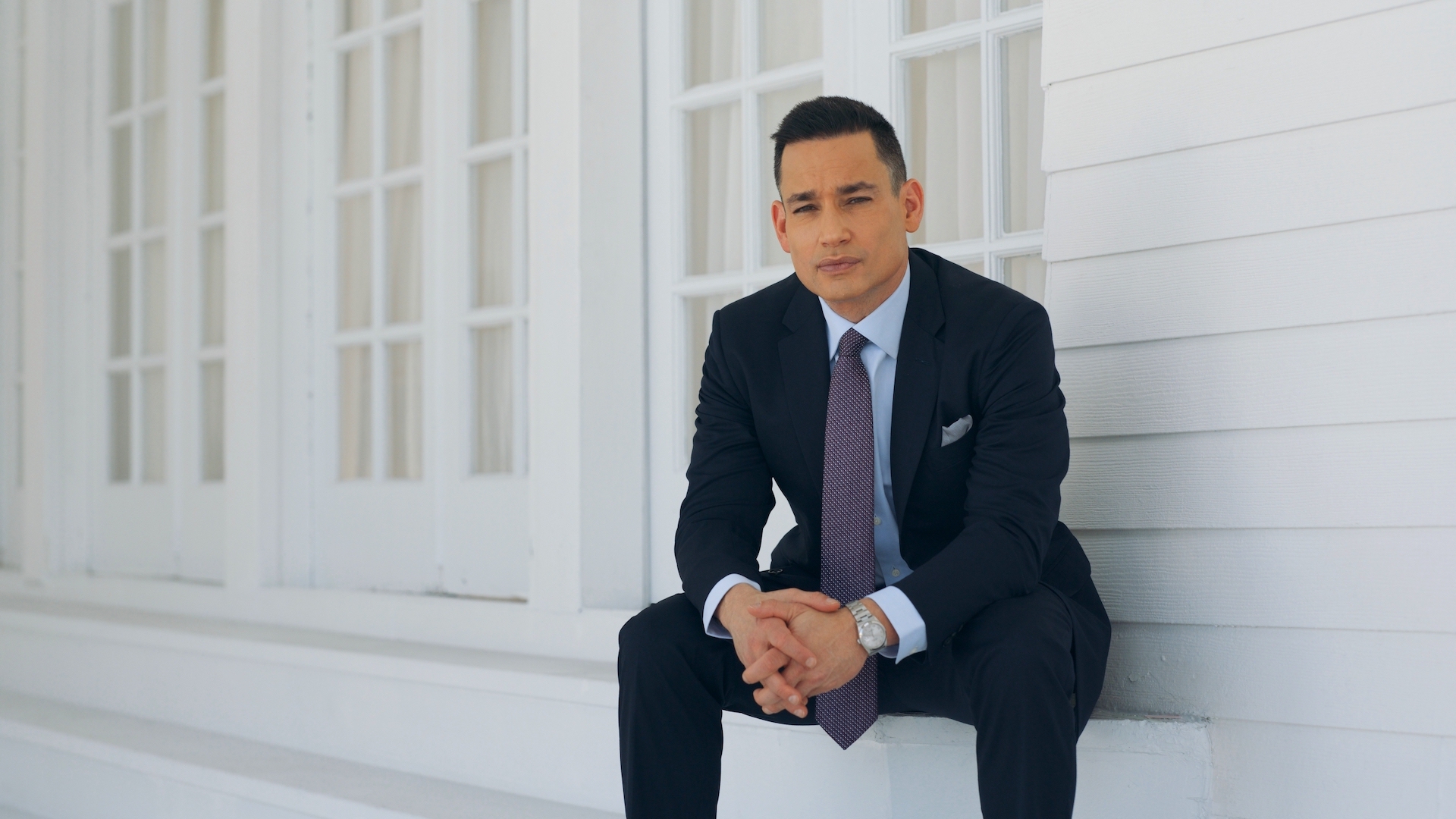
Lorne Kaiser, Esq.
Florida Bar No. 0568491 | Co-Founder, Kaiser Romanello Accident & Injury Attorneys
Lorne Kaiser is a plaintiff's personal injury attorney with over 25 years of experience fighting for injured victims across Broward and Palm Beach County. He co-founded Kaiser Romanello Accident & Injury Attorneys with a simple mission: We Don't Take "Low" For an Answer™.
Read Full Bio →Recent Victories for Clients
$5 Million
Negligent Security
$4 Million
Truck Accident
$1 Million
Ride Share
$1 Million
Car Accident
“Kaiser Romanello changed my life. They are The Dream Team! Could not recommend them anymore! If you want to get the most money for your personal injury claim call Kaiser Romanello today!”

-Lu R
Former client

“l just got off the phone with Mr. Loren Kaiser for a free consultation and he was absolutely amazing. He was extremely helpful, detail oriented and did not add any “rushed” feeling to the phone call. If I have anything substantial to move forward with, I will proudly utilize this law office. Thank you, Mr. Kaiser, for your help, input and advice! It is greatly appreciated.”

-Trina R
Former client
“Steve and his partner are just very knowledgeable, amazing client service, Steve it is the kind of persons who loves what he is doing, he went about and beyond his lawyer responsibilities in my case, they care about you, If you are looking for professionals at the highest levels, use their services. Not only you will be represented by top lawyers, but you feel like part of the family. Thanks for everything, God bless you.”

-Carlos V
Former client
